
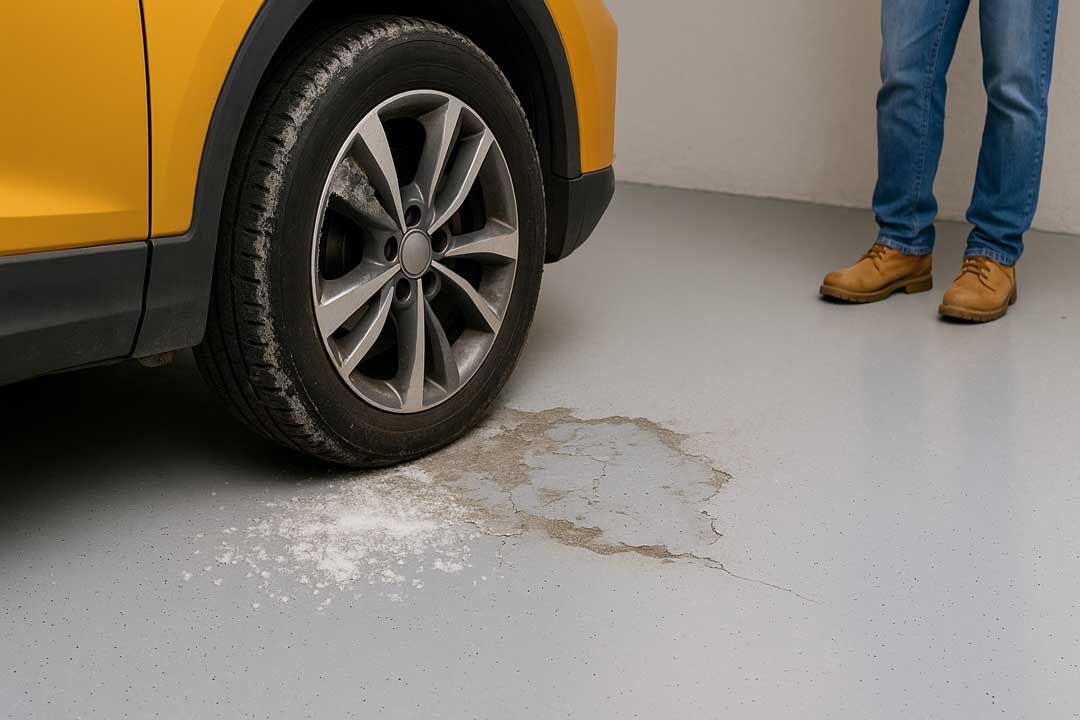
Every winter, New Jersey roads are covered in salt to protect drivers from snow and ice. While this may be essential for road safety, those same salt granules pose a serious threat once they find their way into your garage. For homes with epoxy floor coating for garages, road salt can silently deteriorate the surface, reducing visual appeal, degrading protective layers, and accelerating structural wear.
Understanding how road salt interacts with your epoxy garage floor (and what you can do to prevent long-term damage) is key to protecting your investment. At Veneer Coatings, we help homeowners in Spotswood, East Brunswick, Monroe Township, and beyond combat these seasonal challenges with professionally installed, high-performance epoxy systems built for Northeast winters.
How Road Salt Damages Epoxy Garage Floors
Although epoxy is known for its durability, it’s not invincible. The road salt used across New Jersey (primarily sodium chloride, calcium chloride, and magnesium chloride) can inflict serious damage if not properly managed.
What Happens When Salt Meets Your Garage Floor
Brine Penetration: As snow melts from your vehicle, it mixes with salt to form a corrosive brine. This brine seeps into even the smallest imperfections on your floor.
Chemical Breakdown: Salt accelerates chemical reactions with concrete and epoxy surfaces, especially if the coating is low-quality or improperly installed.
Freeze-Thaw Expansion: Moisture from melted snow and salt can refreeze overnight, expanding inside surface pores and creating microfractures in both concrete and coating.
Over time, these effects cause epoxy coatings to blister, peel, or lose adhesion, especially in the high-traffic zones near garage doors where brine pools most frequently.
Signs Your Epoxy Floor Is Being Affected by Salt
Not all damage is immediately obvious. Salt-related breakdown can begin subtly and worsen over the course of several winters.
Watch for These Red Flags
White, chalky residue that doesn’t wipe clean (efflorescence)
Discoloration or dull spots near the garage entrance
Tiny cracks or bubbling in the epoxy layer
Areas of lifting, flaking, or delamination
A rough, gritty texture where a smooth finish once existed
These symptoms often appear in late winter or early spring, once the freeze-thaw cycle has stressed your floor the most.
Prevention Starts with Professional Installation
Many floor failures begin long before salt ever touches the surface. They start with inadequate surface preparation and low-grade materials. A properly installed epoxy floor coating for garages acts as a sealed, non-porous barrier against moisture, salt, and chemicals.
What Veneer Coatings Does Differently
Mechanical Grinding: We prepare the concrete using industrial grinders to create the perfect surface profile for adhesion.
Moisture Testing: Before coating, we test for vapor emissions to prevent future bubbling or lifting.
Salt-Resistant Systems: We apply commercial-grade epoxy and polyaspartic systems with high resistance to chloride corrosion.
Multiple Coating Layers: Our floors include base, build, and top coats for comprehensive protection.
When professionally installed, our epoxy garage floors are engineered to hold up through New Jersey winters, year after year.
Winter Floor Maintenance Tips for Salt Protection
Even with a premium coating, regular maintenance is essential to prevent the buildup of harmful brine and protect your floor’s finish.
Daily and Weekly Habits
Use Floor Mats: Place containment mats near the garage entry to capture slush and melting snow before it spreads.
Sweep Often: Dry sweep daily or after each snowstorm to remove visible salt and debris.
Mop Weekly: Use a neutral pH cleaner or diluted vinegar solution to break down and remove salt residue. Avoid harsh detergents that degrade the topcoat.
Seasonal Deep Cleaning
After the last snow of the season, perform a thorough rinse and inspection.
Reapply protective topcoat every 2–3 years for continued resistance to salt, moisture, and abrasion.
If damage is visible, schedule a professional floor evaluation immediately.
Can Salt-Damaged Epoxy Floors Be Repaired?
Yes, but the success of the repair depends on the extent of the damage and how early it’s caught.
Repair Approaches We Offer
Spot Repairs: For minor pitting or flaking, we can grind, patch, and recoat only the affected area.
Full Surface Resurfacing: If the topcoat has failed extensively, we remove the damaged layers and install a new coating system.
Moisture Mitigation Systems: For floors experiencing vapor-related salt damage, we apply a breathable epoxy primer designed to manage moisture movement from below.
Veneer Coatings specializes in restoring damaged epoxy garage floors in NJ. We evaluate each case individually to ensure the most effective and long-lasting solution.
Why New Jersey Winters Demand a Superior Coating
The New Jersey climate creates a perfect storm of salt, moisture, and temperature shifts. Garage floors in our region endure:
Frequent freeze-thaw cycles between day and night
High humidity in spring and summer
Road salt runoff during every snow event
Tracked-in debris from vehicles, boots, and snow blowers
An unprotected concrete floor simply cannot withstand these forces for long. Cracks, stains, and salt penetration will quickly follow.
Our epoxy and polyaspartic coating systems are designed specifically to resist all of these conditions, offering a seamless, durable surface that protects the underlying concrete while maintaining a polished, showroom-worthy appearance.
Choosing the Right Epoxy System for Salt Resistance
Not all epoxy is created equal. Low-solids coatings, DIY kits, and single-layer systems often lack the resilience needed to stand up to repeated salt exposure.
Veneer Coatings Recommends:
100% solids epoxy systems with high tensile strength
Polyaspartic topcoats that resist UV, moisture, and chloride damage
Multi-layer installations for optimal durability and appearance
Moisture-tolerant primers for concrete with variable humidity levels
Our coating systems are engineered for long-term performance and installed to the highest professional standards.
Protect Your Garage Floor with Veneer Coatings
Your garage is more than just a storage space; it’s an extension of your home’s value. A professionally installed epoxy garage floor is an investment in both aesthetics and structural protection.
At Veneer Coatings, we combine technical expertise, premium materials, and deep knowledge of the New Jersey climate to deliver floors that stay beautiful and durable, even in the harshest winters.
Whether you’re protecting a brand-new floor or looking to repair damage caused by road salt, our team is here to help.
Let’s keep your garage looking as polished as the rest of your home. Contact Veneer Coatings for your epoxy floor coating for garages and ensure your space is built to last through every season.
